Tilu Rauteli: The Warrior Princess of Garhwal | Complete History
By – Rohit Thapliyal
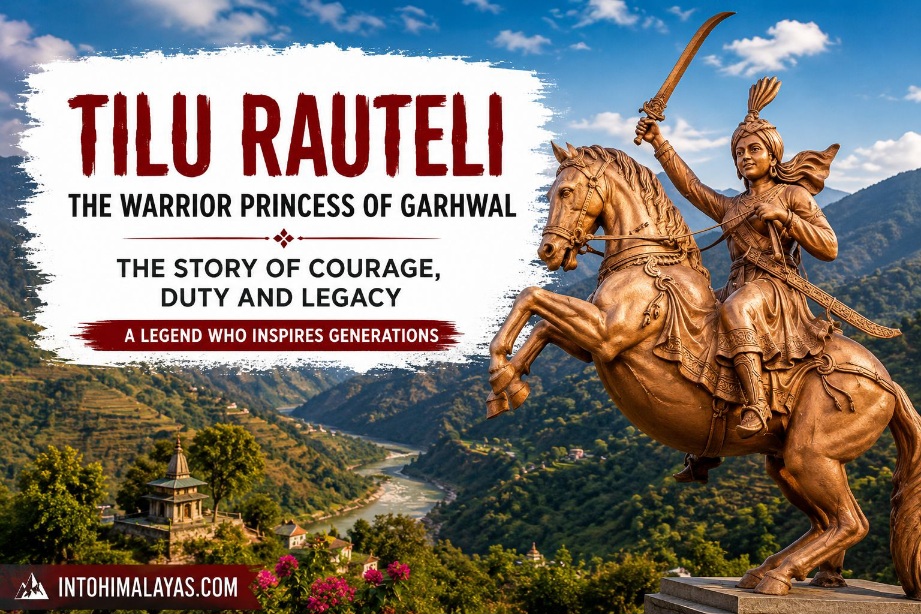
Table of Contents
If you ask who Tilu Rauteli was, the simplest answer is this: she was one of the bravest women in the history of Uttarakhand. According to Garhwali history and oral traditions, Tilu Rauteli took up arms in the 17th century after losing her father and brothers in battle. While still a teenager, she led military campaigns to reclaim Garhwal territories and became a lasting symbol of courage. Even today, her name is remembered across Uttarakhand through folk songs, fairs, schools, and the state’s highest award for women’s bravery.
Unlike many historical figures whose stories survive only in written records, Tilu Rauteli lives equally in history and in the collective memory of the people. Some parts of her life are supported by historical accounts, while others have been preserved through generations of oral storytelling. Together, they have made her one of the most respected figures in Garhwali culture.
The Historical Background of Tilu Rauteli
To understand Tilu Rauteli’s story, it helps to know what Garhwal was like during her lifetime.
The Garhwal Kingdom frequently faced conflicts with neighboring rulers, especially the Katyuri chiefs who controlled parts of Kumaon. Local forts and valleys often changed hands, and many villages lived under the constant threat of raids. Soldiers and local warriors were responsible for protecting strategic routes, settlements, and farmland.
It was during this period of repeated conflict that Tilu Rauteli’s story began. She was born into a Rajput family with close ties to the Garhwal court, where military service was considered both a duty and a matter of honor.
Although historians differ on the exact dates of her birth, most traditional accounts place her life in the first half of the 17th century during the rule of King Mahipat Shah of Garhwal.
The same period also produced another legendary Garhwali commander, Madho Singh Bhandari, who played a key role in defending the Garhwal Kingdom and is remembered for both his military achievements and the famous Maletha Canal. Read our detailed guide on Madho Singh Bhandari to learn more about his life and legacy.
Where Was Tilu Rauteli Born?
According to widely accepted local tradition, Tilu Rauteli was born in the village of Gurad (also written as Guraad or Gwad), near Chaundkot in present-day Pauri Garhwal district of Uttarakhand.
The village lies in the middle Himalayan region, where steep hills, forests, and river valleys shaped everyday life. People depended on farming, livestock, and seasonal trade. Children grew up learning practical skills early, and stories of local heroes formed an important part of family life.
Growing up in this environment, Tilu was familiar with horses, mountain paths, and the responsibilities carried by families involved in defending the kingdom.
Her Family and Early Life
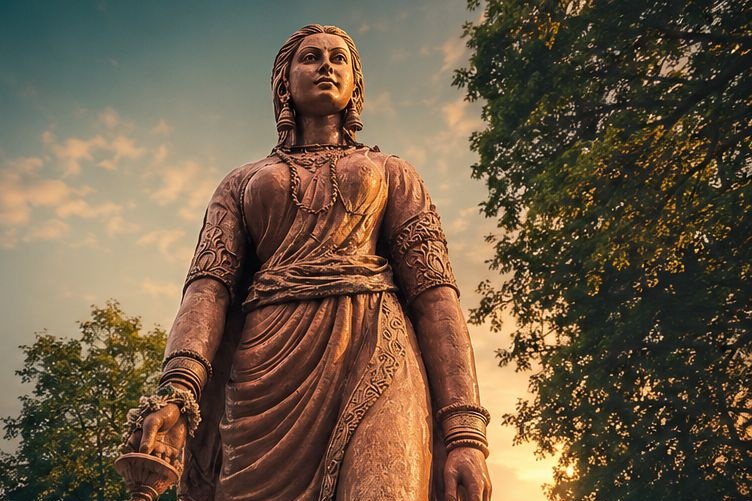
Traditional accounts describe Tilu as the daughter of Bhupu Singh Rautela, a respected Garhwali commander who served the kingdom. Her mother is remembered as Maina Devi.
She also had brothers who fought alongside their father during regional conflicts. Their family was known for military service, and loyalty to the Garhwal rulers was central to their identity.
Many stories suggest that Tilu learned horse riding and basic weapon handling from an early age. While it is difficult to verify every detail historically, such traditions reflect the image of a young woman who was determined, disciplined, and familiar with the realities of life in a border region.
Unlike many legends that portray heroes as fearless from birth, Garhwali folk songs often describe Tilu as someone who became strong because of the hardships she faced.
The Tragedy That Changed Her Life
The defining moment in Tilu Rauteli’s life came when her father and brothers were killed during battles against invading forces.
Different versions of the story identify the enemy differently. Some traditions mention Katyuri chiefs, while others describe local rival rulers fighting for control of Garhwal territory. The exact historical details remain debated, but nearly every version agrees on one point—the deaths of her father and brothers left the family devastated.
At the time, Tilu was reportedly preparing for marriage.
According to local tradition, instead of accepting the loss and moving on with her life, she made an extraordinary decision. She chose to continue the struggle that had claimed her family’s lives.
For a young woman in seventeenth-century Himalayan society, this decision was remarkable. Warfare was almost entirely the responsibility of men, and few examples exist of women personally leading military campaigns in the region.
Why Did Tilu Rauteli Take Up Arms?
Tilu’s decision was driven by two responsibilities that were deeply valued in Garhwali society.
The first was the duty to protect one’s homeland. Villages depended on local defenders because losing territory often meant losing farmland, trade routes, and security.
The second was family honor. In Rajput tradition, courage and loyalty were considered sacred values. The loss of her father and brothers was not only a personal tragedy but also a challenge to the family’s commitment to defending the kingdom.
Local folklore says that her mother initially opposed the idea of her going to war because she had already lost so much. Eventually, seeing her daughter’s determination, she gave her blessings.
This moment appears frequently in Garhwali folk songs, although it belongs more to oral tradition than documented history.
Building Her Own Fighting Force
Tilu did not march into battle alone.
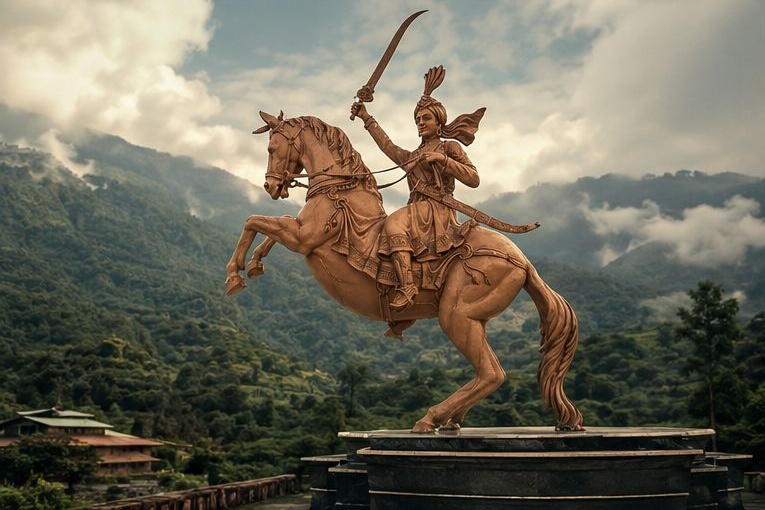
Traditional narratives say she gathered a small group of trusted companions and experienced warriors who believed in her leadership. Among the names remembered in folklore are Belu and Devli, who are often described as her close friends and supporters.
Some versions also mention loyal commanders and horsemen from nearby villages who joined her campaigns.
Because written military records from the period are limited, it is difficult to reconstruct the exact size of her force. What remains consistent across different traditions is that she gradually earned the respect of seasoned fighters despite her young age.
That respect came not because of her family background alone but because she demonstrated confidence, planning, and personal bravery during battle.
The Campaigns That Made Her Famous
According to Garhwali historical tradition, Tilu Rauteli led several successful campaigns to recover territories that had fallen under enemy control.
Rather than fighting one large battle, she is believed to have participated in a series of smaller military operations across the Garhwal hills.
Mountain warfare was very different from battles fought on open plains. Armies moved through narrow ridges, forest trails, and steep valleys where local knowledge often mattered more than numbers.
This worked in favor of Garhwali fighters, who knew the terrain well.
Traditional accounts credit Tilu with helping reclaim several strategic areas, strengthening Garhwal’s control over important routes and settlements. While historians continue to debate the exact sequence of these victories, there is broad agreement that her reputation as a capable military leader grew because of these campaigns.
A Leader Respected Beyond Her Age
One of the most remarkable parts of Tilu Rauteli’s story is her age.
Most traditions describe her as being in her mid-teens when she began leading military expeditions. Whether every detail can be historically confirmed or not, the consistency of this tradition across Garhwal gives it lasting cultural importance.
Leadership in those times depended on more than physical strength. A commander had to make quick decisions, earn the confidence of experienced soldiers, and understand the difficult mountain landscape.
The stories surrounding Tilu suggest that she possessed these qualities despite her youth.
For many people in Uttarakhand today, this is what makes her story so powerful. She is remembered not simply because she fought battles, but because she stepped into responsibility when almost no one expected someone of her age—or a young woman—to do so.
History and Folklore Together
When reading about Tilu Rauteli, it is important to recognize the difference between documented history and oral tradition.
Historical records confirm that she is associated with the Garhwal Kingdom and is remembered as a warrior who fought during regional conflicts. Many details of her campaigns, however, survive mainly through Garhwali folk songs, local ballads known as jagar, and stories passed down within families.
These traditions have preserved her memory for centuries. While individual episodes may differ from village to village, the central message remains remarkably consistent: Tilu Rauteli is remembered as a young woman who chose courage over comfort and duty over personal safety.
That is why, hundreds of years later, her name continues to inspire people across Uttarakhand and remains one of the strongest symbols of bravery in the state’s cultural heritage.
The Final Battle and Tilu Rauteli’s Death
After a series of successful campaigns, Tilu Rauteli had earned the respect of soldiers and local communities across Garhwal. According to traditional accounts, she had helped recover several important areas that had earlier been lost during regional conflicts. Her victories made her one of the best-known military leaders of her time, despite her young age.
Her story, however, does not end with a grand celebration.
Local tradition says that after completing another successful campaign, Tilu stopped near the banks of the Nayar River to rest. While she was bathing in the river, an enemy soldier who had survived the earlier fighting is believed to have attacked her unexpectedly. The attack is described as sudden, giving her little chance to defend herself.
There are different versions of this incident. Some say she was killed by a hidden enemy warrior, while others mention that she was attacked during a brief halt after battle. Since these details come mainly from oral traditions, they cannot be confirmed with complete historical certainty.
What remains consistent across nearly all versions is that Tilu Rauteli died while still very young, ending a life that had already become legendary in Garhwal.
Why Her Story Is Still Remembered
Many historical warriors are remembered because they ruled kingdoms or commanded large armies. Tilu Rauteli’s story is different.
She is remembered because she accepted responsibility at an age when most people were only beginning adult life. Instead of remaining in the background after losing her father and brothers, she chose to lead.
For the people of Uttarakhand, her life represents courage, determination, and loyalty to one’s land. These qualities have kept her memory alive long after the battles themselves were forgotten.
Her story has also become an example of women’s leadership in a period when military roles were almost entirely held by men.
Tilu Rauteli in Garhwali Folk Songs
One of the main reasons Tilu Rauteli’s story has survived for centuries is the tradition of Garhwali folk music.
Across villages in Garhwal, local singers have passed down songs describing her courage, battles, and sacrifices. These songs are performed during community gatherings, cultural events, and traditional celebrations.
Unlike written history, folk songs often include emotions, conversations, and dramatic moments that may have changed over time. They should be understood as cultural memories rather than exact historical records.
Even today, many older residents of Uttarakhand know parts of these songs by heart, helping each generation remember her story.
The Tradition of Jagar
Tilu Rauteli is also remembered through the Garhwali tradition of Jagar, a form of ritual singing that recalls local heroes, ancestors, and deities.
During a Jagar performance, singers narrate stories that connect present-day communities with their historical and cultural past. In some regions, Tilu Rauteli is remembered as a heroic figure whose bravery deserves respect and remembrance.
These performances are part of Uttarakhand’s living cultural heritage. They preserve stories that may never have been written down but continue to hold meaning for local communities.
Tilu Rauteli Mela
Several places in Uttarakhand organize events in memory of Tilu Rauteli, with the most well-known being the Tilu Rauteli Mela.
The fair is both a cultural gathering and a tribute to one of Garhwal’s greatest heroes. People from nearby villages come together to watch folk performances, listen to traditional music, and celebrate the history of the region.
Local artists often perform ballads based on her life, allowing younger generations to learn about her through storytelling rather than textbooks alone.
For visitors, the fair offers a chance to experience Garhwali culture while understanding why Tilu Rauteli continues to hold such an important place in local history.
Places Associated with Tilu Rauteli
Several locations across Garhwal are connected with Tilu Rauteli through local tradition.
Her birthplace in the Chaundkot region is remembered with great pride by nearby villages. Different forts, battle sites, and sections of the Nayar Valley are also linked with her military campaigns, although historians continue to study the exact locations.
Travellers interested in Garhwal’s history often visit these places not because they are large tourist attractions but because they help explain the landscape where her story unfolded.
The mountains, forests, rivers, and narrow ridges that shaped her campaigns remain much the same today.
Tilu Rauteli Award by the Government of Uttarakhand
To keep Tilu Rauteli’s legacy alive, the Government of Uttarakhand presents the Tilu Rauteli Award every year. It is one of the state’s most respected honours for women and recognizes those who have made outstanding contributions in fields such as education, social service, sports, public service, women’s empowerment, environmental conservation, arts, and other areas that benefit society.
The award is usually presented around Harela, a traditional festival of Uttarakhand celebrated in July, making the occasion even more meaningful. Women from different districts of the state are selected based on their achievements and their positive impact on society.
By naming the award after Tilu Rauteli, the government connects present-day achievements with the courage and determination that she is remembered for. The honour encourages women across Uttarakhand to continue making a difference in their communities while keeping alive the memory of one of the state’s most admired historical figures.
Tilu Rauteli in Schools and Public Memory
Children growing up in Uttarakhand usually hear about Tilu Rauteli long before they study her in detail.
Her story appears in school lessons, cultural programmes, public speeches, and local celebrations. Roads, institutions, and community events have also been named after her in different parts of the state.
Because of this, she remains part of everyday public memory rather than being limited to history books.
Many families continue to tell her story to children as an example of courage, responsibility, and standing up for what is right.
History and Legend
Like many historical figures from the Himalayan region, Tilu Rauteli’s life exists at the meeting point of history and folklore.
Basic elements of her story—her connection with the Garhwal Kingdom, her role as a warrior, and her lasting reputation—are widely accepted. Other details, including conversations, specific battles, and the circumstances surrounding her death, come largely from oral traditions preserved over generations.
This does not reduce their cultural value. Oral history has always been an important way of preserving the past in the Himalayan region, especially during periods when written records were limited.
Reading her story with this understanding allows us to appreciate both the historical figure and the cultural traditions that have kept her memory alive.
What Tilu Rauteli’s Story Means Today
Modern Uttarakhand has changed in many ways, but the qualities associated with Tilu Rauteli remain relevant.
Her story reminds people that leadership is not determined by age alone. It also shows that courage often comes from accepting responsibility during difficult times rather than seeking recognition.
For women across the state, she represents confidence and determination. For the wider community, she symbolizes loyalty to one’s people and the willingness to protect what matters most.
These ideas continue to give her story meaning centuries after the events themselves.
Final Thoughts
Tilu Rauteli occupies a unique place in the history of Uttarakhand. She was not remembered because she founded a kingdom or ruled for decades. Instead, she became a lasting symbol of bravery through the choices she made during one of the most difficult periods of her life.
Whether viewed through the lens of history or through Garhwali folk tradition, her story reflects the values that mountain communities have respected for generations—courage, duty, resilience, and commitment to one’s homeland.
That is why her name continues to be spoken with respect across Garhwal. From village folk songs and cultural fairs to government honours and school lessons, Tilu Rauteli remains one of Uttarakhand’s most admired historical figures, reminding each new generation that true courage is measured by actions rather than age.
By – Rohit Thapliyal
27 july 2026

Winter Char Dham Yatra in Uttarakhand: Where the Gods Go After the Temples Close

Tilu Rauteli: The Warrior Princess of Garhwal | History, Story & Legacy

Madho Singh Bhandari: The Brave Warrior and Engineer of Garhwal

Baijnath Temple Kangra: Shravan Celebrations at the Ancient Stone Abode of Shiva

Sham Valley Trek Ladakh – The Best Easy Monsoon-Proof Homestay Trek in the Himalayas

Hampta Pass Trek in July: A Journey from Green Monsoon Valleys to the Desert of Spiti

Best Solo Treks in Uttarakhand: 10 Himalayan Trails for Every Kind of Trekker

Kilkileshwar Mahadev Temple, Srinagar Garhwal: A Peaceful Shiva Shrine Overlooking the Alaknanda