Harela Festival Uttarakhand: History, Significance & Traditions
By – Rohit Thapliyal
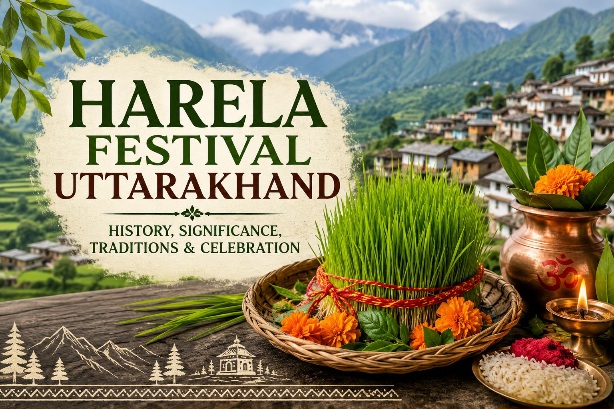
Table of Contents
The arrival of the monsoon in Uttarakhand is unlike anywhere else in India. As the first rain clouds drift across the Himalayan peaks, the fragrance of wet earth fills the air, terraced fields turn lush green, and village life begins preparing for a new agricultural season. For the people of the mountains, this transformation is more than just a change in weather—it is the beginning of one of the most meaningful festivals of the year, Harela.
Deeply rooted in the traditions of Kumaon and celebrated in many parts of Garhwal, Harela is not merely a religious occasion. It is a festival that reflects the Himalayan way of life, where farming, forests, family values and faith have always existed in harmony. While many festivals are remembered for grand processions or elaborate decorations, Harela is celebrated through simple yet profound customs that honour nature and express gratitude for life’s blessings.
Even today, if you visit a village in Almora, Bageshwar, Pithoragarh or Champawat during Harela, you will find homes filled with freshly grown green shoots, elders blessing younger family members, women singing traditional folk songs, and farmers preparing their fields with renewed hope. The festival beautifully preserves a way of life that has been passed down through generations and continues to define the cultural identity of Uttarakhand.
Harela Festival 2026 Date
In 2026, Harela will be celebrated on Thursday, 16 July, coinciding with Shravan Sankranti (Kark Sankranti). Preparations begin nearly ten days before the festival, when families sow seeds such as barley, wheat, mustard, maize and paddy in small bamboo baskets, wooden trays or earthen pots inside their homes. These seeds gradually sprout into tender green shoots known as Harela, which become the most important symbol of the festival.
The timing of Harela is closely linked with the beginning of the monsoon and the start of the sowing season in the Himalayan region. For farming communities, it marks the transition into one of the busiest and most important periods of the agricultural calendar, making it both a spiritual and practical celebration. The tradition of sowing seeds several days before the festival continues in many households today and remains one of the most distinctive features of Harela.
What Makes Harela So Special?
The word Harela literally means “greenery,” and that simple meaning captures the essence of the festival. It celebrates the arrival of fresh life after the dry summer months and expresses gratitude for the rains that make farming possible in the Himalayan region.
Unlike many festivals that focus on mythology alone, Harela is deeply connected with everyday life. The mountains of Uttarakhand have always depended upon agriculture, forests and seasonal rainfall. Long before weather forecasts existed, local communities observed nature carefully and aligned their festivals with the agricultural cycle. Harela became a way of welcoming the rains while praying for fertile fields, healthy livestock and the prosperity of every household.
Although the festival is celebrated most prominently in the Kumaon region, several parts of Garhwal also observe the occasion under local names such as Mol Sankranti or Rai-Sagran. While customs differ slightly from one district to another, the central message remains the same—respect nature, value family traditions and begin the new agricultural season with gratitude.
The History and Origin of Harela
The history of Harela stretches back centuries and is believed to have originated with the farming communities of the Central Himalayas. Agriculture has always been challenging in the mountains, where cultivation depends almost entirely on seasonal rainfall and carefully maintained terraced fields. As a result, every monsoon was welcomed with prayers and rituals seeking nature’s blessings.
Over time, these agricultural traditions became closely associated with Hindu beliefs, particularly those surrounding Lord Shiva and Goddess Parvati. According to local tradition, Harela also commemorates the divine union of Shiva and Parvati during the sacred month of Shravan. Many families prepare small clay idols of Shiva, Parvati and Lord Ganesha, worship them with flowers, leaves and seasonal offerings, and pray for peace, prosperity and a successful farming season.
This beautiful combination of spirituality and agriculture is what makes Harela unique. In Uttarakhand, worshipping the divine has always gone hand in hand with respecting the land that sustains life. The festival reminds people that nature is not merely a resource but a sacred companion deserving of care and gratitude.
Religious Significance of Harela
Shravan is considered one of the holiest months in the Hindu calendar, especially for devotees of Lord Shiva. Since the Himalayas are believed to be the abode of Shiva, the arrival of Shravan carries immense religious importance throughout Uttarakhand.
On Harela, homes are cleaned, family temples are decorated, and special prayers are offered before the harvested green shoots are distributed among family members. Elders gently place the Harela on the heads of younger members while blessing them with good health, long life and prosperity. In many Kumaoni households, these blessings are still spoken in the local dialect, preserving a cultural heritage that has survived for generations.
Many villagers believe that healthy green shoots symbolise abundance in the coming agricultural season. While these beliefs may not have scientific explanations, they reflect the optimism and faith that have sustained mountain communities through generations of farming in difficult terrain.
The festival also strengthens family relationships. Members working in cities often try to return to their ancestral villages for Harela, making it an occasion that reconnects families with their roots and traditions.
Harela and the Agricultural Life of Uttarakhand
To truly understand Harela, one must first understand the lives of Himalayan farmers.
Unlike the fertile plains, farming in Uttarakhand requires patience, skill and complete dependence on nature. The arrival of monsoon determines when fields can be prepared, seeds can be sown and crops can begin their journey towards harvest. Harela marks this crucial transition.
Ten days before the festival, families sow different varieties of seeds together. Watching them grow into healthy green shoots becomes a symbolic reminder of the harvest they hope to receive in the coming months. On the festival day, these shoots are offered to the family deity before being placed on the heads of every member of the household.
Interestingly, many villages also place a few Harela shoots inside cattle sheds, grain storage rooms or near farming tools. This reflects the traditional belief that prosperity should bless not only the family but also the animals, crops and every aspect of rural life.
Even today, despite migration and changing lifestyles, many families continue this practice. It is one of the reasons Harela has remained relevant in modern Uttarakhand. Rather than becoming a symbolic festival observed only in temples, it continues to be woven into the everyday lives of people across the hills.
Local Traditions That Continue to Thrive
Every district celebrates Harela in its own unique way, yet the warmth of the festival remains remarkably similar across Uttarakhand.
In Kumaon, children eagerly watch the Harela shoots grow every morning, often competing to see whose basket has grown the tallest greenery. On the day of the festival, elders distribute the shoots with blessings while women prepare traditional festive meals and sing folk songs that celebrate the beauty of the rainy season.
A particularly cherished tradition is that of inviting married daughters to their maternal homes during Harela. They are welcomed with affection and gifted seasonal fruits, vegetables and homemade delicacies before returning to their families. This custom reinforces the emotional bond between generations and reflects the importance of family in Himalayan culture.
Another tradition that survives in several villages is Gedi, where children walk on bamboo stilts through village paths and open fields. Elders fondly recall how this simple game once filled entire villages with laughter during the monsoon months and remains one of the most memorable parts of Harela celebrations.
In many parts of Garhwal, community worship at village temples and tree plantation activities have become an integral part of the festival. Long before environmental campaigns became popular, local communities considered planting trees during Harela a sacred responsibility—a way of thanking nature for sustaining life in the mountains.
How Harela is Celebrated Across Uttarakhand
Although Harela is celebrated throughout Uttarakhand, its traditions vary slightly from one region to another, making it a fascinating cultural experience. In Kumaon, the festival begins ten days before Shravan Sankranti, when every household prepares a small bamboo basket, wooden tray, or earthen pot filled with fertile soil. Seven or sometimes five varieties of seeds—such as barley, wheat, mustard, maize, sesame and paddy—are carefully sown and watered daily. These tender green shoots are treated with great reverence because they symbolise the prosperity that every family hopes the coming agricultural season will bring.
On the morning of Harela, the youngest members of the family eagerly gather around as elders cut these shoots with great care. After offering them to the household deity, the Harela is gently placed over the heads and shoulders of every family member while traditional Kumaoni blessings are recited. It is a deeply emotional ritual that reminds each generation of its connection with family, ancestors and the land they cultivate.
In several villages, people also visit local temples to offer prayers before beginning agricultural work in their fields. Folk musicians sing traditional songs dedicated to nature, while women dressed in colourful traditional attire prepare festive meals for relatives and neighbours. Unlike modern celebrations centred around loud entertainment, Harela remains peaceful, intimate and closely connected to everyday village life.
In Garhwal, where the festival is also observed as Mol Sankranti or Rai-Sagran in many places, customs differ slightly but the spirit remains the same. Families worship their Kul Devta (family deity), temples organise special prayers, and community plantation drives have become an important part of the celebrations. The festival continues to unite villages through shared rituals, collective prayers and respect for nature.
Traditional Foods Prepared During Harela
No festival in Uttarakhand is complete without traditional food, and Harela is no exception. The arrival of the monsoon brings fresh seasonal vegetables, making the festive meal simple yet deeply satisfying.
One of the most common preparations found in Kumaoni homes is Urad Dal Bade (Pakoras), which are considered an essential festive delicacy. Alongside these are Puri, Aloo ke Gutke, Jhangora ki Kheer, seasonal vegetable curries and dishes prepared using locally grown grains such as mandua and traditional mountain pulses like bhatt and gahat.
What makes the Harela feast unique is not the number of dishes but the warmth with which they are shared. Families exchange homemade food with neighbours and relatives, reinforcing the community spirit that has always been central to life in the Himalayan villages.
Harela – A Festival That Teaches Environmental Conservation
Long before environmental conservation became a global movement, the people of Uttarakhand understood the importance of protecting forests. Living amidst the Himalayas taught generations that healthy forests meant fertile fields, abundant water sources and secure livelihoods.
For this reason, planting a tree during Harela has been a long-standing tradition in many villages. Families often planted fruit trees, fodder trees or indigenous Himalayan species around their homes, village pathways and agricultural fields. These trees would later provide shade, food, fodder and protection against soil erosion.
In recent years, this traditional practice has evolved into one of Uttarakhand’s largest environmental campaigns. Schools, colleges, government departments, forest officials and local organisations participate in mass plantation drives across the state during Harela. Lakhs of saplings are planted each year, transforming the festival into a powerful symbol of ecological responsibility while preserving its cultural roots.
The message of Harela remains remarkably relevant today. As climate change and deforestation continue to affect mountain ecosystems, this centuries-old festival reminds us that respecting nature is not merely an environmental responsibility but a way of life.
Local Beliefs and Lesser-Known Customs
Every village has its own stories surrounding Harela, many of which are rarely found in books.
Many elderly villagers believe that the healthier and greener the Harela shoots grow during the ten days before the festival, the more favourable the coming agricultural season will be. While such beliefs are rooted in tradition rather than science, they continue to reflect the optimism with which mountain communities welcome the monsoon.
Some families preserve a few Harela shoots inside grain storage rooms, believing they will protect the harvest throughout the year. Others place them above the entrance of their homes or near the family temple as symbols of prosperity and divine blessings.
Another beautiful custom is the invitation extended to married daughters. In many Kumaoni households, daughters return to their maternal homes during Harela, where they receive seasonal fruits, vegetables, sweets and gifts before returning to their new homes. This tradition strengthens family bonds and reminds everyone that festivals are as much about relationships as they are about rituals.
Children eagerly await Gedi, the traditional bamboo stilt game that has entertained generations. Watching youngsters balance themselves on handmade bamboo stilts while running through village paths remains one of the festival’s most charming sights, especially in rural Kumaon.
Why Every Traveller Should Experience Harela
Travelling through Uttarakhand during Harela offers an experience that goes far beyond sightseeing. Instead of witnessing a staged cultural performance, visitors become observers of everyday Himalayan life at its most authentic.
The sound of traditional folk songs drifting through villages, the sight of green Harela shoots inside homes, farmers preparing terraced fields after the first rains, and families gathering together for prayers create memories that cannot be recreated in cities.
For photographers, Harela presents countless opportunities to capture the vibrant colours of the monsoon. For cultural enthusiasts, it provides insight into traditions that have remained unchanged for centuries. For responsible travellers, it serves as a reminder that sustainable living has always been an integral part of Himalayan culture.
If you plan to visit Uttarakhand in July, spending time in villages around Almora, Bageshwar, Pithoragarh, Champawat, Ranikhet, Kausani, Pauri Garhwal or Chamoli will allow you to witness Harela in its most authentic form. Respect local customs, seek permission before photographing rituals, and participate with humility if invited by local families.
Conclusion
Harela is much more than the beginning of the monsoon or the start of another farming season. It is a living tradition that reflects the values upon which Himalayan society has been built—gratitude towards nature, devotion to family, respect for agriculture and faith in the balance between humans and the environment.
In a rapidly changing world, festivals like Harela remind us that progress does not have to come at the cost of tradition. The tiny green shoots grown inside village homes symbolise hope, renewal and continuity. They remind every generation that prosperity begins with caring for the land that nourishes us.
For Uttarakhand, Harela is not simply a festival celebrated once a year. It is a reflection of the mountain way of life, where forests are revered, rainfall is welcomed with gratitude, and every harvest begins with a prayer. Whether you are exploring the villages of Kumaon, travelling through the valleys of Garhwal, or simply learning about the rich cultural heritage of the Himalayas, Harela offers a beautiful lesson in living harmoniously with nature.
Even today, as the first monsoon clouds embrace the Himalayan peaks and the fragrance of rain fills the valleys, countless homes across Uttarakhand continue the age-old tradition of nurturing tiny green shoots. Those shoots may appear delicate, but they carry the strength of centuries-old wisdom—reminding us that the future remains green only when we continue to respect, protect and celebrate nature, just as the people of Uttarakhand have done through Harela for generations.
– Rohit Thapliyal
for intohimalayas

Winter Char Dham Yatra in Uttarakhand: Where the Gods Go After the Temples Close

Tilu Rauteli: The Warrior Princess of Garhwal | History, Story & Legacy

Madho Singh Bhandari: The Brave Warrior and Engineer of Garhwal

Baijnath Temple Kangra: Shravan Celebrations at the Ancient Stone Abode of Shiva

Sham Valley Trek Ladakh – The Best Easy Monsoon-Proof Homestay Trek in the Himalayas

Hampta Pass Trek in July: A Journey from Green Monsoon Valleys to the Desert of Spiti

Best Solo Treks in Uttarakhand: 10 Himalayan Trails for Every Kind of Trekker

Kilkileshwar Mahadev Temple, Srinagar Garhwal: A Peaceful Shiva Shrine Overlooking the Alaknanda