
Madhyamaheshwar trek: A Raw Himalayan journey to Peace and Devotion
Some journeys are not planned for luxury or comfort—they are meant to test you, slow you down, and connect you with something deeper. My trip to Madhyamaheshwar Temple was exactly that.
Tucked away in the serene valleys of the Garhwal Himalayas, this trek is not just about reaching a temple. It’s about the roads you take, the people you meet, the exhaustion you feel, and the peace you find at the end.
The Beginning: from roads to mountains
The journey started casually, like most good trips do.
Two of us began from Rudraprayag and headed towards Ukhimath, where our third friend was waiting. Ukhimath itself has a calm vibe—it’s not crowded, not rushed, just peaceful.
Once we met, we started the real journey—three friends, one bike ride, and a long road ahead.
The ride from Ukhimath towards Ransi was surprisingly smooth. The roads were in good condition, winding through forests and valleys, with the mountains slowly opening up in front of us. There’s something about riding in the hills—the silence, the air, and the views—that already makes you feel like you’ve left the chaos behind.
Reaching Ransi: The real Journey begins
We reached Ransi village, which is the base for the Madhyamaheshwar trek. This is where the road ends and the actual effort begins.
From here, everything changes.
No engines. No shortcuts. Just your legs and the mountain.
After walking around 3 km, we reached Agtoli. The trail ahead gradually introduced us to what was coming—steep climbs, narrow paths, and complete immersion in nature.
The Trek: steep, silent, and beautiful
The trail moves through small settlements like Gaundhar village and eventually reaches Bantoli.
We stayed at Upper Bantoli, and honestly, this stop made a big difference.
Stay & Food at Bantoli
The stay was simple but comfortable. No luxury, but everything you actually need:
-
- Clean rooms
-
- Warm blankets
-
- Home-cooked pahadi food
The food felt like it came straight from someone’s kitchen—simple dal, roti, sabzi—but after a long trek, it tasted better than any restaurant meal.
Along the route, small stalls offered cucumber, jaljeera, and basic snacks. These small things keep you going and add a local touch to the journey.
Trek Difficulty: not Easy, but worth it
Let’s not sugarcoat it—the trek is tough.
After Bantoli, the climb becomes steeper. Your legs start to feel heavy, your breathing changes, and every turn feels longer than expected.
But this is also where the magic happens.
-
- Dense forests surround you
-
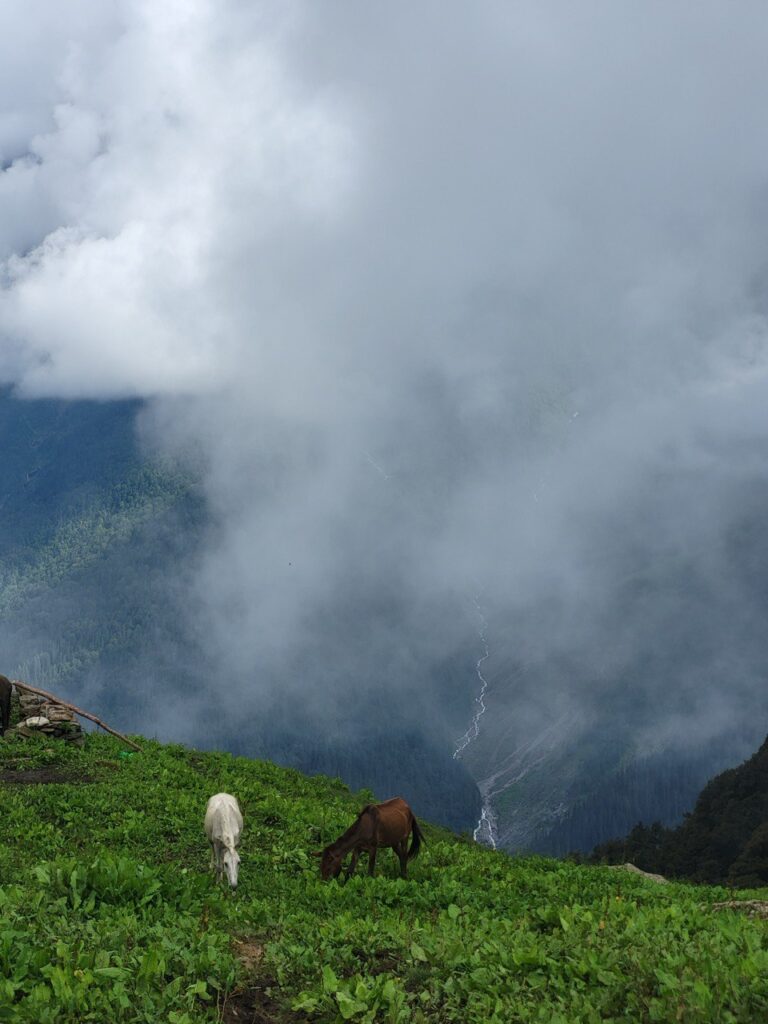
- Rivers flow somewhere below
-
- Occasional glimpses of snow-covered peaks keep motivating you
There are moments when you want to stop, sit, and question why you started—but then you look around, and the mountains quietly answer that for you.
Reaching Madhyamaheshwar: exhaustion meets peace
By the time we reached Madhyamaheshwar Temple, it was evening.
We were tired. Completely drained.
But at the same time, there was a strange sense of calm.
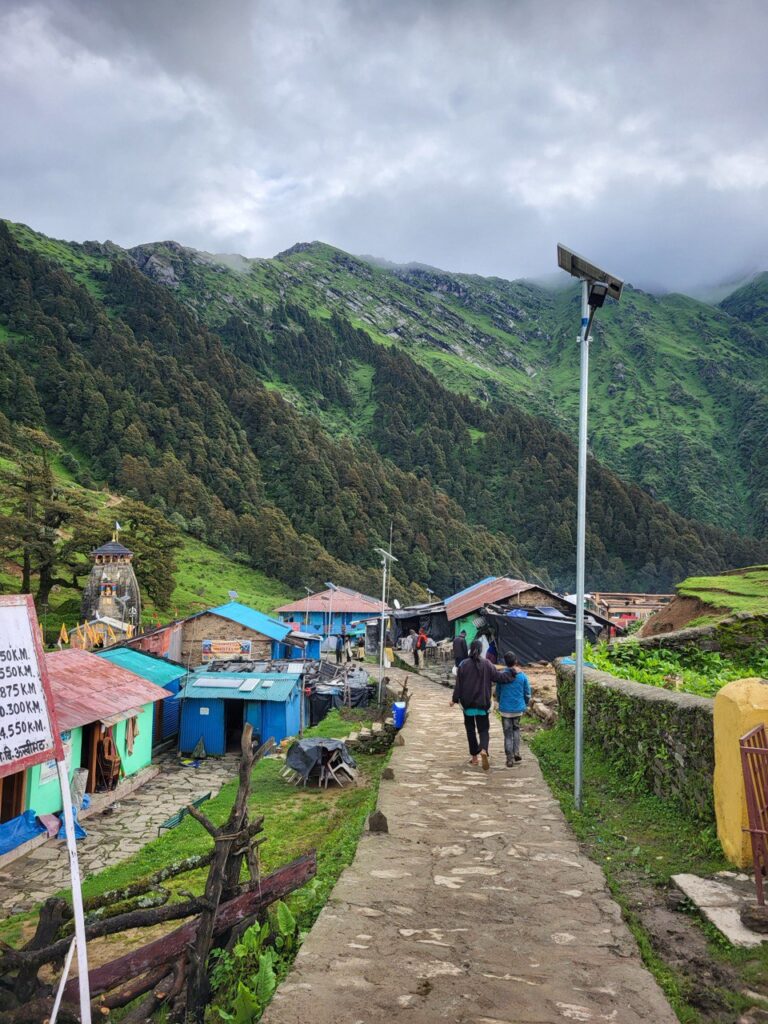
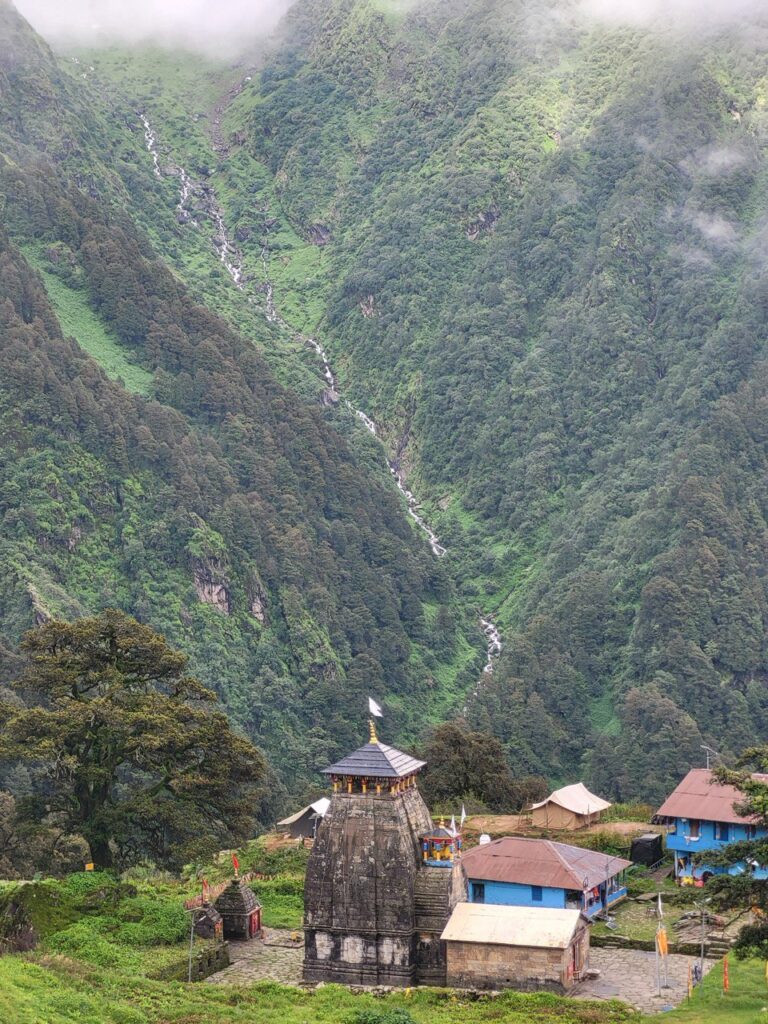
The temple stands quietly, surrounded by massive Himalayan peaks, away from crowds and noise. Unlike many popular pilgrimage sites, this place still feels untouched.
Stay Near the Temple
There is a system followed here:
-
- Dormitories are available
-
- Hotels operate on a token system (one fills, then next)
We decided to stay in tents, which turned out to be a great experience.
Cost & Food:
-
- Thali: ₹200 (unlimited roti)
-
- Tea: ₹20–30
-
- Paratha: ₹60–80
Food is basic but filling—exactly what your body needs after such a climb.
Budha Madhyamaheshwar: the real highlight
Before the evening aarti, we decided to hike a bit further to Budha Madhyamaheshwar.
And this is something you should not miss at any cost.
At the top, there’s a small, beautiful lake. The water is still, and right in front of you stands the mighty Chaukhamba Peak.
The reflection of the peaks in the lake is something you can’t capture fully in photos. You just stand there, quietly, taking it all in.
No noise. No rush. Just mountains and silence.
Evening Aarti: simple and spiritual
We came back down for the aarti at the temple.
It wasn’t loud or crowded—it was calm and deeply spiritual.
There’s a system for prasad and donations, where you get a proper receipt. Everything is simple and well managed.
Moments like this remind you why such places are important—not just religiously, but mentally.
Night in the Mountains
After dinner, we didn’t have the energy to do anything else.
We slept early, completely exhausted from the day.
But that sleep? It was deep, peaceful, and uninterrupted—the kind you only get in the mountains.
Morning: fresh start and darshan
We woke up early the next morning.
The air was cold, fresh, and quiet.
We went for darshan again, took prasad, had some chai, and started preparing for the descent.
There’s always a different feeling in the morning—it’s calmer, lighter, and somehow more clear.
The Descent : one long day
We decided to descend all the way down in one day.
From Madhyamaheshwar to Agtoli—it was long and tiring, especially on the knees. But going down is always faster than climbing up.
Once we reached Agtoli, it felt like a big relief. Our bikes were waiting, and the journey shifted back from trekking to riding.
Back to Roads: Ransi to Ukhimath
From Ransi, we rode back to Ukhimath.
But instead of ending the trip there, we decided to take a different route.
Bonus Journey: Chopta and Gopeshwar
We rode via Chopta—a place often called Mini Switzerland.
Open meadows, fresh air, and wide mountain views—it was the perfect transition after the trek.
Finally, we reached Gopeshwar and visited the beautiful Gopinath Temple.
Ending the journey with another temple visit felt complete, like closing a circle.
Things you should know before going
 Do’s
Do’s
-
- Start your trek early
-
- Carry enough cash
-
- Stay hydrated
-
- Respect locals and traditions
-
- Visit Budha Madhyamaheshwar
 Don’ts
-
- Don’t litter
-
- Don’t overpack
-
- Don’t underestimate the trek
-
- Avoid trekking late in the evening
 What to carry
-
- Good trekking shoes
-
- Warm clothes (weather changes quickly)
-
- Rain protection
-
- Basic medicines
-
- Snacks and water
 Best time to visit
-
- May to June
-
- September to October
Avoid monsoon due to landslides and slippery trails.
Final Thoughts
Madhyamaheshwar is not a luxury destination. It doesn’t offer comfort or convenience.
What it offers is something far more valuable—real experience.
It’s in the steep climbs, the simple food, the silence of the mountains, and the peaceful temple that you find something rare.
If you’re someone who travels not just to see places but to feel them, this journey will stay with you for a long time.
By – Rohit Thapliyal
If you’re exploring spiritual Himalayan treks, you can also check out my detailed guide on the Tungnath Trek, which is one of the easiest and most scenic routes in Uttarakhand.