Who Was Madho Singh Bhandari? History of Garhwal's Legendary Warrior

By – Rohit Thapliyal

Facebook
WhatsApp
Pinterest
Email
X
madho singh bhandari

Table of Contents

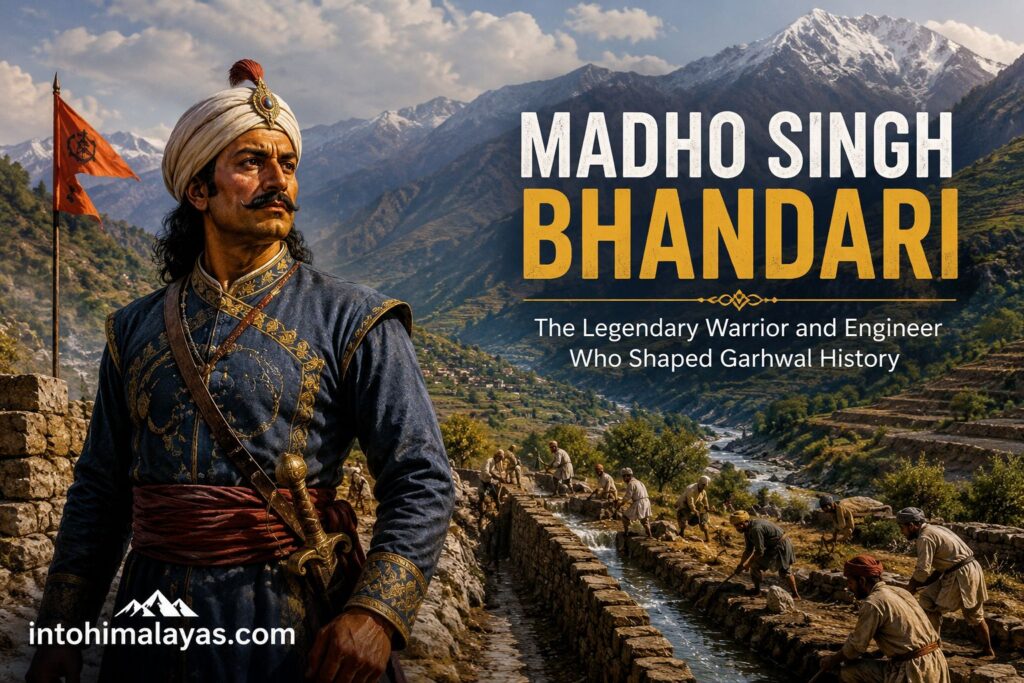
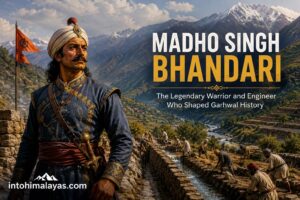
Madho Singh Bhandari was one of the most remembered personalities of Garhwal history. He was a military commander, administrator, and a skilled engineer who served the Garhwal Kingdom during the 17th century. While many people know him as a brave warrior, his contribution to water management and village development is equally important.

His name is still heard in Garhwali folk songs and local stories, where he is remembered as a person who worked for the security and welfare of the people of the mountains. Many stories related to him have been passed down through generations, mixing history with local beliefs and traditions.

The time when Madho Singh Bhandari lived

Madho Singh Bhandari lived during the reign of King Mahipat Shah, who ruled the Garhwal Kingdom in the early 1600s. At that time, Garhwal was not the modern state of Uttarakhand but a Himalayan kingdom spread across the mountain regions of present-day Garhwal.

The kingdom faced frequent challenges. There were conflicts with neighbouring kingdoms, difficulties in controlling remote mountain areas, and the constant challenge of managing life in a harsh Himalayan environment.

A strong army and capable administrators were important for the survival of the kingdom. Madho Singh Bhandari became one of the most trusted figures in this period because of his leadership and practical skills.

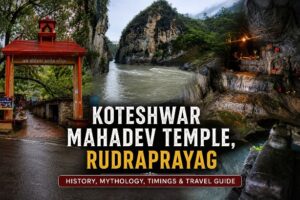
The peaceful surroundings, the sound of the Alaknanda flowing below the rocky cliffs, and the simplicity of the cave temple make Koteshwar different from many other religious sites in the state. There are no large temple complexes or elaborate structures here. Instead, visitors descend a flight of steps to reach a cave that has been associated with Lord Shiva for generations through local traditions and religious belief.

Although it is often included in travel itineraries around Rudraprayag, Koteshwar Mahadev is more than just a sightseeing stop. For the people of Garhwal, it remains an active place of worship where prayers, daily rituals and local faith continue much as they have for decades.

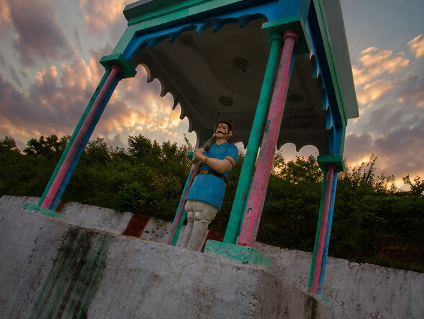
madho singh bhandari statue

Madho Singh Bhandari as a commander of the Garhwal army

Madho Singh Bhandari is mainly remembered as a brave military commander who served King Mahipat Shah. Local traditions describe him as a skilled warrior who led Garhwali forces during conflicts with neighbouring regions.

One of the most famous accounts connected with him is his campaign towards the northern Himalayan border areas, including regions near Mana and Niti valleys in present-day Chamoli district.

According to local traditions, he played an important role in strengthening Garhwal’s influence in these difficult border regions. These areas were strategically important because they connected Garhwal with Tibet through high mountain passes.

Although detailed written records of every military campaign are limited, his reputation as a capable commander remains strong in Garhwali history.

The engineer behind the warrior

What makes Madho Singh Bhandari different from many other historical warriors is that his legacy is not limited to battles.

He is also remembered for his knowledge of irrigation and water management. In the Himalayan region, farming has always depended on careful use of limited water resources. A small change in water availability could decide whether a village had a successful harvest or faced hardship.

Traditional accounts credit Madho Singh Bhandari with developing irrigation channels and water systems to support agriculture in Garhwal villages.

These works show that he understood the geography of the mountains. Building water channels in the Himalayas was not a simple task. It required knowledge of slopes, streams, soil conditions, and seasonal water flow.

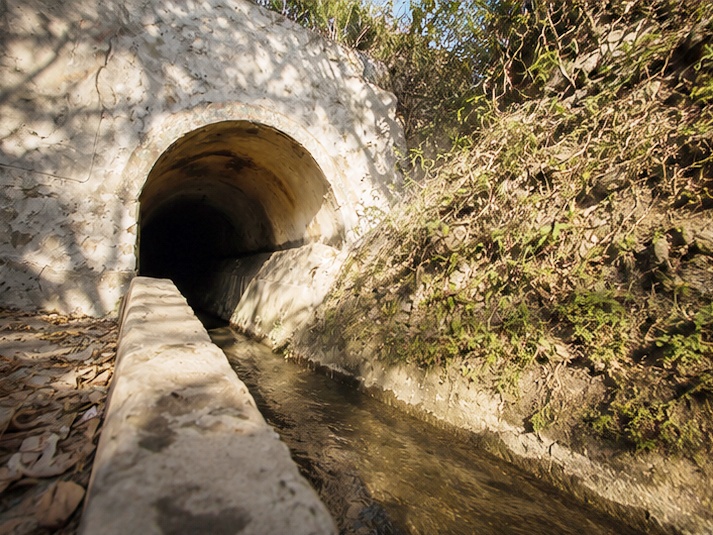
madho singh tunnel maletha

The famous Gohna Lake and canal story

The story most commonly associated with Madho Singh Bhandari is connected with the Gohna Lake region of Chamoli district.

According to local belief, he was involved in constructing a water channel system to provide irrigation facilities to villages. During this work, several difficulties came because of the unstable Himalayan terrain.

One traditional story says that his son sacrificed his life during the construction work so that the project could be completed. This story is widely known among local communities, but historians generally consider it a part of oral tradition rather than a proven historical event.

The importance of this story lies in what it represents. It reflects the value Himalayan communities placed on water resources and collective welfare. In mountain societies, creating irrigation systems was often considered a major service to future generations.

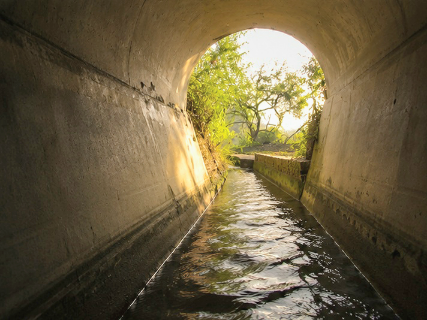
inside the tunnel made by great madho singh bhandari

Madho Singh Bhandari and the importance of water in Garhwal

To understand why Madho Singh Bhandari’s engineering work is remembered, it is important to understand mountain life.

Most villages in Garhwal traditionally depended on small agricultural fields. Unlike plains, where rivers provide easy irrigation, mountain farming relies heavily on springs, small streams, and carefully built channels.

A person who could bring water to dry fields could directly improve the lives of many families.

This is why Madho Singh Bhandari is remembered not only as a soldier but also as a problem solver. His image in local memory represents both protection and development.

His connection with Garhwali folk traditions

Like many Himalayan heroes, much of Madho Singh Bhandari’s story has survived through oral traditions rather than written history.

Garhwali folk songs and local narratives often mention him as a symbol of bravery, loyalty, and intelligence. These songs helped preserve his memory among generations who may not have read historical records.

In Himalayan culture, historical figures are often remembered through stories because they represent certain values. Madho Singh Bhandari represents courage in difficult situations and responsibility towards society.

Water has always been central to farming in the Himalayas, making irrigation works especially valuable for mountain communities. This close connection between agriculture and everyday life is still reflected in traditional festivals such as Harela, which celebrates the farming season and the relationship between people and nature.

The debate between history and folklore

When discussing figures like Madho Singh Bhandari, it is important to understand the difference between recorded history and traditional stories.

Some events connected with him are supported by historical references, especially his association with the Garhwal Kingdom and military service. Other stories, especially those involving personal sacrifices and extraordinary events, come mainly from local traditions.

Both are important in understanding his place in Uttarakhand’s cultural memory.

History tells us about the person who lived and served the kingdom. Folk traditions tell us how communities remember and respect that person.

Places associated with Madho Singh Bhandari

Travellers interested in Garhwal history can find references to Madho Singh Bhandari while exploring the Chamoli region.

The Gohna Lake area is among the most commonly associated places connected with his stories. Chamoli itself is an important destination for understanding Garhwal’s culture, villages, and historical traditions.

The routes towards Mana, Niti Valley, and other border regions also remind visitors of the strategic importance of the Himalayan areas where Garhwal rulers maintained their influence.

Exploring these places with knowledge of their history adds another layer to the travel experience.

Why Madho Singh Bhandari remains important today

Madho Singh Bhandari’s story continues because he represents more than just a warrior from the past.

He was a person who understood the needs of his land and people. His military skills protected the kingdom, while his engineering knowledge helped communities deal with one of the biggest challenges of mountain life — water.

For the people of Garhwal, his name is connected with courage, intelligence, and service.

Even today, when travellers explore the villages and valleys of Uttarakhand, stories of people like Madho Singh Bhandari help them understand that the Himalayas are not only about landscapes and temples. They are also about the people who shaped life in these mountains through their work and dedication.

Conclusion

Madho Singh Bhandari’s story is an important part of Garhwal’s history because it brings together courage, leadership, and practical thinking. Whether remembered through historical records or local traditions, he continues to hold a special place in the collective memory of Uttarakhand.

If you ever travel through Garhwal, especially the Chamoli region, you’ll find that his name still comes up in conversations, folk songs, and local stories. It is a reminder that the history of the Himalayas is shaped not only by kings and battles, but also by people whose work made a lasting difference to the communities around them.


By – Rohit Thapliyal

For – intohimalayas

Leave a Comment

Your email address will not be published. Required fields are marked *

Scroll to Top