Hampta Pass Trek in July: Crossing from Green Monsoon Valleys to the Desert of Spiti
By – Rohit Thapliyal
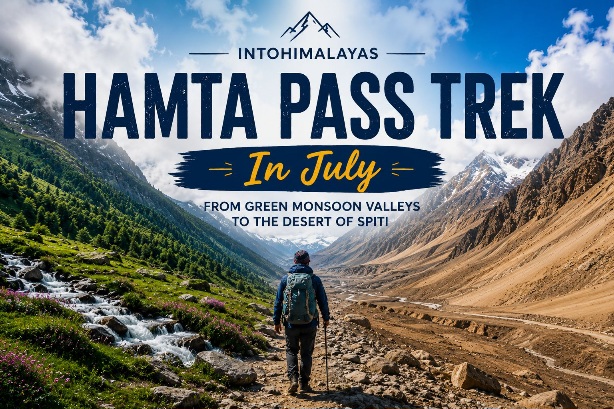
Table of Contents
There are very few places in the Himalayas where nature changes so dramatically that it almost feels like crossing into another country. The Hampta Pass Trek is one of those rare journeys. In just four to five days, you leave behind the rain-soaked forests and lush meadows of Kullu Valley and step into the stark, rugged landscapes of Lahaul and Spiti. It is this unbelievable contrast that makes Hampta Pass one of the most rewarding Himalayan treks, especially in July.
Most travellers avoid the mountains during the monsoon, assuming every trail will be slippery and every view hidden behind clouds. But Hampta Pass tells a completely different story. July is when this trail comes alive. The valleys around Manali turn unbelievably green, waterfalls appear around almost every bend, alpine flowers bloom across the meadows, and mist dances through the pine forests. Then, almost magically, once you cross the pass, everything changes. The greenery disappears, the air becomes drier, the mountains turn shades of brown and grey, and the landscape suddenly resembles the cold desert of Spiti.
That contrast is difficult to explain unless you witness it yourself.
I had seen countless photographs of Hampta Pass before planning the trek, but none of them prepared me for what it actually felt like. The photographs captured the scenery, but not the sound of glacial streams rushing beside the trail, the smell of wet deodar forests after an afternoon shower, or the quiet excitement among trekkers as everyone waited for the first glimpse of the pass. Looking back now, I don’t remember only the mountains. I remember the little moments that made the journey feel personal.
Why July is the Best Month for Hampta Pass Trek
If someone asked me whether Hampta Pass should be done in July, my answer would be a clear yes.
Unlike many Himalayan treks that become risky during the peak monsoon, Hampta Pass benefits from its unique geography. The trek begins in the lush Kullu Valley, where the rains transform the forests into vibrant shades of green. Every small stream becomes more energetic, waterfalls tumble down rocky cliffs, and the alpine grasslands burst into colour with blooming wildflowers. It almost feels as if the mountains have been freshly painted overnight.
Our trek leader smiled when he saw everyone constantly stopping to take photographs during the first day. “Save some battery,” he laughed. “The real surprise is still ahead.”
At first, I assumed he was talking about the summit. Later, I realised he was talking about the landscape itself.
The most fascinating thing about Hampta Pass is that it connects two entirely different climatic regions. On one side lies Kullu, nourished by monsoon clouds and dense forests. On the other side lies Lahaul and Spiti, protected by the Pir Panjal range and receiving very little rainfall. Within a few hours of crossing the pass, the scenery changes so dramatically that it almost feels impossible.
This geographical transition is what makes Hampta Pass unlike any other Himalayan trek.
Reaching Manali – Where the Journey Truly Begins
Every Himalayan journey has its own rhythm, and for Hampta Pass, that rhythm begins in Manali.
I reached the town a day before the trek, partly to acclimatise and partly because Manali itself deserves to be explored slowly. Instead of staying near the crowded Mall Road, I spent most of my evening wandering through Old Manali, where narrow stone lanes, wooden houses, apple orchards and small cafés create a completely different atmosphere.
The cafés were filled with trekkers discussing weather updates, backpacking routes and altitude stories over cups of coffee. I eventually settled at Johnson’s Café, a place that has quietly become a favourite among mountain lovers over the years. Sitting beside the garden with a warm meal while listening to fellow trekkers exchange stories from Stok Kangri, Pin Parvati and Bhrigu Lake instantly made me feel that another adventure was about to begin.
Later that evening, I walked towards Café 1947, tucked beside the Beas River. The sound of flowing water mixed with live music created the kind of mountain evening that doesn’t need an itinerary. I simply sat there watching the river disappear into the darkness, imagining where it would eventually flow while wondering what the next few days had in store.
Early the following morning, our vehicles left Manali before sunrise and began climbing towards Jobra, the actual starting point of the trek. As the town slowly disappeared behind us, the roads narrowed, pine forests became denser, and the first hints of the mountains began revealing themselves through the morning mist.
The excitement inside the vehicle was impossible to hide. Some trekkers were attempting their very first Himalayan trek, while others had already completed famous trails like Kedarkantha and Valley of Flowers. Yet everyone seemed equally eager because Hampta Pass has a reputation that attracts both beginners and experienced trekkers alike.
Through Pine Forests, Meadows and the First Campsite
The first day’s trail is perhaps one of the gentlest introductions the Himalayas can offer.
Within minutes of leaving Jobra, the path entered thick forests of pine, maple and deodar. The sunlight struggled to reach the forest floor, creating patches of golden light between towering trees. Small wooden bridges crossed icy streams that originated somewhere high above the valley, and every now and then the sound of distant waterfalls echoed through the forest.
One thing that surprised me was how alive the valley felt during July.
Butterflies fluttered across the trail, tiny flowers grew between rocks, and fresh mountain air carried the earthy fragrance that only arrives after monsoon showers. Every turn seemed to reveal another waterfall cascading down the cliffs. Instead of rushing towards the campsite, our group found ourselves stopping repeatedly, not because the trail was difficult, but because every few minutes there was something beautiful enough to photograph.
As we climbed higher, the forests slowly opened into wide alpine meadows where horses grazed peacefully under dark clouds. It was here that we encountered a group of Gaddi shepherds moving hundreds of sheep towards higher grazing grounds.
Their presence reminded me that these mountains were home long before they became trekking destinations.
Our guide later explained that the Gaddi community has followed these seasonal migration routes for generations. Every summer, families travel with their sheep through these valleys in search of fresh grasslands before returning to lower villages once winter approaches. The trails that modern trekkers now enjoy were originally created by these shepherds and local traders crossing between valleys centuries ago.
One elderly shepherd carrying a beautifully carved wooden staff greeted us with a cheerful “Ram Ram.” We stopped for a brief conversation, during which he pointed towards the higher slopes and casually mentioned that weather changes quickly around the pass. Looking at the perfectly clear sky above us, it was difficult to believe him.
Barely an hour later, thick clouds rolled into the valley, hiding the mountains almost completely.
Mountain weather has its own rules.
By late afternoon, we reached Chika, our first campsite. The tents were pitched beside a roaring stream flowing directly from melting glaciers above. There was no network, no traffic and no city noise. Only the sound of water, occasional sheep bells in the distance and the aroma of hot tea drifting from the kitchen tent.
It is amazing how quickly simple things begin to feel luxurious in the mountains.
A steaming cup of chai after several hours of walking.
Fresh pakoras served while sitting on damp grass.
The comfort of warm soup as cold winds begin flowing through the valley.
That evening, most of us gathered outside our tents watching clouds move across the surrounding peaks. Nobody was looking at their phones anymore. Conversations shifted from work and cities to mountains, travel dreams and previous adventures.
Somewhere in that quiet valley, without even realising it, everyday life had already begun to feel very far away.
Crossing Hampta Pass – Where Two Different Himalayas Meet
The second day of the trek took us from Chika to Balu Ka Ghera, a campsite that sits quietly beneath towering mountains and serves as the final halt before the pass. The trail became noticeably steeper, and the valley slowly started losing its forests. The cheerful sound of birds gave way to the roar of glacial streams, while the landscape transformed into a rugged world of boulders, snow patches and wide alpine plains. Every few kilometres, we crossed icy streams by carefully hopping over rocks or removing our shoes and walking barefoot through freezing water. It was uncomfortable for a few minutes, but strangely enjoyable at the same time. Moments like these are what make trekking memorable. You don’t remember the distance covered; you remember the cold water rushing past your feet and everyone laughing while trying not to lose their balance.
Our guide explained that “Balu Ka Ghera” literally translates to the “bed of sand.” Long ago, glaciers flowing through this valley deposited layers of sand and loose sediment here, giving the campsite its unusual appearance. As evening approached, clouds gathered over the surrounding peaks, occasionally revealing fresh snow on the mountains above. Sitting outside the tent with a hot bowl of soup, I noticed that conversations had become quieter. Everyone knew that the next morning would be the most challenging and rewarding day of the trek.
We woke well before sunrise. The temperature had dropped significantly, and the valley was wrapped in complete silence except for the sound of the nearby stream. Headlamps lit the narrow trail as we slowly climbed towards Hampta Pass. At this altitude, every step demands patience. The air feels thinner, breathing becomes heavier, and you instinctively slow your pace. Our trek leader repeatedly reminded us that mountain trekking is never about speed. It is about maintaining a steady rhythm.
As daylight spread across the valley, snowfields began appearing around us. The green slopes we had walked through over the previous two days were now far below. A final steep climb brought us to the colourful prayer flags fluttering at Hampta Pass, standing proudly at an altitude of approximately 14,100 feet.
For several minutes, nobody spoke.
Behind us stretched the lush Kullu Valley, covered in forests, waterfalls and clouds. Ahead lay the dramatic landscape of Lahaul and Spiti, where barren mountains stretched endlessly beneath a deep blue sky. Standing on that narrow mountain pass felt like standing on the border between two completely different worlds. I have completed a few Himalayan treks over the years, but I have rarely witnessed such an immediate transformation in geography.
Local Beliefs and Stories of the Mountains
The Himalayas are not just mountains for the local people; they are living landscapes woven with faith, traditions and generations of stories. While resting at the pass, one of the local guides shared a belief that many Gaddi shepherds still follow today. Before crossing Hampta Pass with their flocks, they quietly fold their hands towards the surrounding peaks, seeking blessings for a safe journey. There are no elaborate rituals or temples here—just a silent moment of respect for the mountains.
Another belief often repeated by older shepherds is that one should never shout unnecessarily near the high ridges. They believe loud noises disturb the mountain spirits and can invite sudden weather changes. Whether one believes these stories or not, there is something about the silence at high altitude that naturally encourages respect. Nobody in our group felt like speaking loudly. The vastness of the mountains somehow demanded quietness on its own.
Our trek leader also pointed towards distant peaks and smiled, saying, “The mountains always let you cross on their terms, never yours.” It was a simple sentence, but after watching clouds roll in and disappear within minutes throughout the trek, it made complete sense.
Entering the Cold Desert of Spiti
The descent from Hampta Pass was unlike anything I had expected. Within a few kilometres, the lush greenery began disappearing almost magically. The streams became narrower, the grasslands faded into rocky slopes, and the mountains changed from shades of green to brown, grey and ochre.
The contrast was astonishing.
Just a few hours earlier, I had been walking through mist-covered valleys filled with wildflowers. Now I was surrounded by dramatic cliffs that looked more like Ladakh than Himachal Pradesh. This sudden transition is the biggest reason Hampta Pass remains one of India’s most unique crossover treks.
As we descended towards Shea Goru and later Chhatru, the landscape continued becoming drier and more rugged. The sky looked bigger, the air felt sharper, and there was a sense of openness that was completely different from the enclosed valleys of Kullu. It almost felt as if someone had changed the scenery overnight.
If the roads remain open, most trekking groups conclude the expedition with a visit to Chandratal Lake. Reaching the lake after several days of walking feels like the perfect ending. Surrounded by barren mountains, the crystal-clear water reflects changing shades of blue and turquoise throughout the day. Local villagers believe Chandratal, often called the “Lake of the Moon,” is sacred, and many visitors quietly walk along its shores without disturbing the peaceful atmosphere. Sitting there with tired legs and a cup of tea in hand, I realised that some places are best enjoyed in silence.
Local Food, Mountain Hospitality and Helpful Tips
One of the underrated joys of this journey is the food. Before starting the trek, I made sure to enjoy a hearty breakfast in Manali. Small cafés and bakeries around Old Manali serve everything from fresh bread to traditional Himachali meals, but if you want to try local flavours, don’t miss Siddu, a steamed wheat bread served with homemade ghee, or a plate of hot rajma-chawal after the long drive.
Apart from Johnson’s Café and Café 1947, I also stopped by Drifters’ Café, another favourite among backpackers, where conversations about trekking routes are almost as common as cups of coffee. Before leaving Manali, many trekkers also pick up last-minute essentials from Himalayan Trails Adventure Store and The Mountain Shop near the Mall Road area, where you can find trekking socks, rain covers, gloves and energy snacks if you’ve forgotten anything.
During the trek itself, the kitchen team deserves far more appreciation than they usually receive. After hours of climbing, a simple meal of dal, rice, vegetables and hot rotis tastes better than any restaurant meal back home. Evening soups, endless cups of chai and warm desserts somehow become the highlight of every campsite.
How to Reach Hampta Pass Trek
Reaching Hampta Pass is fairly straightforward. The nearest major town is Manali, which is well connected by overnight Volvo buses from Delhi and Chandigarh. If you prefer travelling by train, Chandigarh is the closest convenient railway station, while Bhuntar Airport serves as the nearest airport, located about fifty kilometres from Manali.
Most organised trekking companies include transportation from Manali to Jobra, the official starting point of the trek, and later arrange the return journey from Chhatru after the trek concludes. Since July falls during the monsoon season, I would strongly recommend keeping at least one extra buffer day in your itinerary, as occasional landslides or weather-related delays are common in the mountains.
Final Thoughts
Hampta Pass is not simply another Himalayan trek where you climb to a viewpoint and return. It is a journey through two completely different landscapes, two different climates and two distinct mountain personalities. Few treks in India offer such a dramatic transition within such a short distance.
Even weeks after returning home, what stayed with me wasn’t just the view from the pass. It was the laughter shared while crossing freezing streams, the quiet wisdom of Gaddi shepherds, the smell of rain-soaked pine forests, steaming cups of chai at camp, and that unforgettable first glimpse of the barren Spiti mountains stretching endlessly into the horizon.
If you’ve already explored the colourful meadows of the Valley of Flowers, walked through the ancient villages of Har Ki Dun, or experienced the snowy forests of Kedarkantha, Hampta Pass deserves a place on your list. It offers a completely different side of the Himalayas—one where monsoon greenery slowly gives way to the timeless beauty of a cold desert.
Some treks impress you with their altitude. Others with their landscapes.
Hampta Pass leaves an impression because it makes you feel like you’ve travelled across two different worlds without ever leaving the mountains. And perhaps that is exactly why, every July, trekkers return to this incredible Himalayan crossover, hoping to relive the magic all over again.
FAQs About Hampta Pass Trek in July
Is July a good time for the Hampta Pass Trek?
Yes, July is considered one of the best months to do the Hampta Pass Trek. While many Himalayan trails receive heavy rainfall during the monsoon, Hampta Pass offers a unique experience where the Kullu Valley is lush and green, while the Spiti side remains comparatively dry due to the rain-shadow effect. This contrast is what makes the trek so special during July.
How difficult is the Hampta Pass Trek?
Hampta Pass is a moderate-level trek suitable for beginners with good fitness as well as experienced trekkers. The trail includes gradual ascents, river crossings, snow patches, and one challenging pass-crossing day. Preparing with regular walking, jogging, or stair climbing for a few weeks before the trek makes the journey much more comfortable.
How many days are required for the Hampta Pass Trek?
Most trekking operators complete the trek in five days, excluding travel to and from Manali. If Chandratal Lake is accessible, an additional visit is usually included on the final day before returning to Manali.
Will there be snow on Hampta Pass in July?
Yes. Even in July, snow patches are usually present near Hampta Pass. Depending on the winter snowfall and weather conditions, trekkers may walk across sections of snow while approaching the pass.
Can beginners do the Hampta Pass Trek?
Absolutely. Hampta Pass is often recommended as one of the best beginner-friendly Himalayan treks because it combines scenic beauty with moderate challenges. However, a basic level of fitness is essential to comfortably complete the trek.
Is Chandratal Lake included in the Hampta Pass Trek?
In most trekking itineraries, yes. If road and weather conditions permit, trekkers visit Chandratal Lake after descending into the Spiti region. During periods of heavy rain or road closures, the visit may occasionally be skipped for safety reasons.
If there’s one thing I’ve learned while exploring the Himalayas, it’s that every region has its own unique charm. Hampta Pass amazed me with its incredible journey from the lush green valleys of Kullu to the rugged landscapes of Spiti, but being from Uttarakhand, I can confidently say that the Garhwal Himalayas have equally unforgettable experiences to offer. If you’re planning more mountain adventures, do explore some of our detailed guides on the best monsoon treks in Uttarakhand, the best solo treks in Uttarakhand, the beautiful and spiritually significant Madhyamaheshwar Trek, and a collection of hidden treks near Joshimath that remain untouched by the usual tourist crowds. Each trail offers a different side of the Himalayas, and together they make for some of the most rewarding trekking experiences in North India.
– Rohit Thapliyal
for intohimalayas
Winter Char Dham Yatra in Uttarakhand: Where the Gods Go After the Temples Close
Tilu Rauteli: The Warrior Princess of Garhwal | History, Story & Legacy

Madho Singh Bhandari: The Brave Warrior and Engineer of Garhwal
Baijnath Temple Kangra: Shravan Celebrations at the Ancient Stone Abode of Shiva
Sham Valley Trek Ladakh – The Best Easy Monsoon-Proof Homestay Trek in the Himalayas
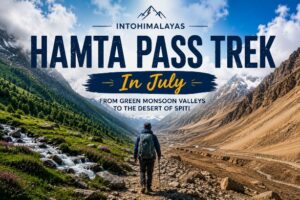
Hampta Pass Trek in July: A Journey from Green Monsoon Valleys to the Desert of Spiti

Best Solo Treks in Uttarakhand: 10 Himalayan Trails for Every Kind of Trekker
Kilkileshwar Mahadev Temple, Srinagar Garhwal: A Peaceful Shiva Shrine Overlooking the Alaknanda